

The Bravest Person I Know. . . .
The Bravest Person I Know. . .
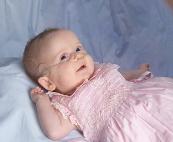
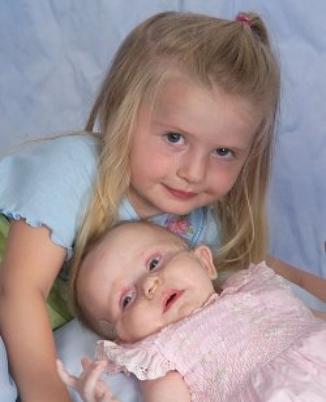
Many of you know our daughter, Margaret Elena Kelts.
Maggie was born two years ago at Avista Adventist Hospital in Broomfield,
Colorado.
Up until the time of her birth, we had no indication that there was a problem. An
ultrasound done at 20 weeks had been completely normal, and did not show any
evidence of health problems. As a result, Elizabeth (her mother and my wife)
and I were not expecting anything out of the ordinary when we went into the
hospital for our scheduled C-section.
Elizabeth lay on the the table, mildly sedated and breathing shallowly, as the
OB/Gyn made an incision into her abdomen and uterus. Maggie was then slowly
removed, pink and wet, from her mother's womb. The cord was clamped and cut.
Maggie opened her eyes slightly and looked at me and the surgeon, appearing
more annoyed that uncomfortable. She was then transferred to the warming
table for suctioning and cleaning.
However, it rapidly became clear that there was a problem.
Maggie, who had seemed perfect at the moment of birth, appeared to be having
trouble breathing. The NICU nurses suctioned her and wiped the cheese-like
mucous from her body, but she seemed to be unable to breathe on her own.
She rapidly became unresponsive.
I stood nervously by, watching. Although I am a physician, I am not a
pediatrician, and I do not believe in treating my own family members for serious
medical problems. Fundamentally, I think my judgement is impaired when it
comes to my family. As a result, I stood by and watched.
Minutes ticked by.
Several attempts at intubation were made by increasingly anxious and worried
staff.
Maggie remained, unmoving, unbreathing. . . .
Sweat dripped into my eyes, stinging them.
". . . .do you think?"
"....pneumothorax?" the skilled NICU nurses said to one another, listening to her
chest with a stethoscope.
I looked down at my wife, Elizabeth. She had a hazy, anesthetized look to her
eyes but beneath I could see a deepening thundercloud of fear.
"Is she ok?" Elizabeth said to me, weakly.
"I. . . .I don't know. . . .She's not breathing. . . ." I said softly, shaking my head.
More minutes. . . .
After what seemed like a year, but was only 45 minutes, our pediatrician
appeared. An X-ray of Maggie's chest was ordered, revealing tangled loops of
intestine nestled amongst the bottom of her left lung. She had, unbeknownst to
any of us, developed a diaphragmatic hernia, and her intestines had filled up a
large portion of the space in the left side of her chest. The intestines pushed
her lung superiorly, shoved her heart to the right, and (likely) were pinching off
the blood supply to a left kidney that had migrated into the chest within the
retro-peritoneal space. With each breath, her left lung was being more pinched.
Maggie was rushed by ambulance to Children's Hospital in Denver. She was
admitted to the NICU and almost immediately suffered a pulmonary hemorrhage
from the massive pulmonary hypertension she developed.
She remained sedated and intubated, laying on her back and only occasionally
opening her eyes, for many days. I remember touching her soft, silky hair (the
NICU nurses repeatedly scolded me for this) and placing my index finger in her
small hand. She would grasp my finger and hold on tightly.
Over the next several weeks, she was cared for by a huge, dedicated team of
excellent staff. It took 5 weeks in intensive care, surgery to close the diaphragm,
and countless days of family bedside vigil, before Maggie was finally released
home on oxygen. . . .
That was almost two years ago, and not a day goes by that I do not think of it,
like a rock in the pit of my stomach which has shrunken to the size of a pebble,
but still rattles around frequently to let me know it is still there.
Maggie has grown and is gregarious, curious and a joy to have as part of our
family. And she had the courage to stay with us, at a time when she could have
chosen to leave.
Maggie, I love you, and you are the bravest person I know.
Eric Kelts
Many of you know our daughter, Margaret Elena Kelts.
Maggie was born two years ago at Avista Adventist Hospital in Broomfield,
Colorado.
Up until the time of her birth, we had no indication that there was a problem. An
ultrasound done at 20 weeks had been completely normal, and did not show any
evidence of health problems. As a result, Elizabeth (her mother and my wife)
and I were not expecting anything out of the ordinary when we went into the
hospital for our scheduled C-section.
Elizabeth lay on the the table, mildly sedated and breathing shallowly, as the
OB/Gyn made an incision into her abdomen and uterus. Maggie was then slowly
removed, pink and wet, from her mother's womb. The cord was clamped and cut.
Maggie opened her eyes slightly and looked at me and the surgeon, appearing
more annoyed that uncomfortable. She was then transferred to the warming
table for suctioning and cleaning.
However, it rapidly became clear that there was a problem.
Maggie, who had seemed perfect at the moment of birth, appeared to be having
trouble breathing. The NICU nurses suctioned her and wiped the cheese-like
mucous from her body, but she seemed to be unable to breathe on her own.
She rapidly became unresponsive.
I stood nervously by, watching. Although I am a physician, I am not a
pediatrician, and I do not believe in treating my own family members for serious
medical problems. Fundamentally, I think my judgement is impaired when it
comes to my family. As a result, I stood by and watched.
Minutes ticked by.
Several attempts at intubation were made by increasingly anxious and worried
staff.
Maggie remained, unmoving, unbreathing. . . .
Sweat dripped into my eyes, stinging them.
". . . .do you think?"
"....pneumothorax?" the skilled NICU nurses said to one another, listening to her
chest with a stethoscope.
I looked down at my wife, Elizabeth. She had a hazy, anesthetized look to her
eyes but beneath I could see a deepening thundercloud of fear.
"Is she ok?" Elizabeth said to me, weakly.
"I. . . .I don't know. . . .She's not breathing. . . ." I said softly, shaking my head.
More minutes. . . .
After what seemed like a year, but was only 45 minutes, our pediatrician
appeared. An X-ray of Maggie's chest was ordered, revealing tangled loops of
intestine nestled amongst the bottom of her left lung. She had, unbeknownst to
any of us, developed a diaphragmatic hernia, and her intestines had filled up a
large portion of the space in the left side of her chest. The intestines pushed
her lung superiorly, shoved her heart to the right, and (likely) were pinching off
the blood supply to a left kidney that had migrated into the chest within the
retro-peritoneal space. With each breath, her left lung was being more pinched.
Maggie was rushed by ambulance to Children's Hospital in Denver. She was
admitted to the NICU and almost immediately suffered a pulmonary hemorrhage
from the massive pulmonary hypertension she developed.
She remained sedated and intubated, laying on her back and only occasionally
opening her eyes, for many days. I remember touching her soft, silky hair (the
NICU nurses repeatedly scolded me for this) and placing my index finger in her
small hand. She would grasp my finger and hold on tightly.
Over the next several weeks, she was cared for by a huge, dedicated team of
excellent staff. It took 5 weeks in intensive care, surgery to close the diaphragm,
and countless days of family bedside vigil, before Maggie was finally released
home on oxygen. . . .
That was almost two years ago, and not a day goes by that I do not think of it,
like a rock in the pit of my stomach which has shrunken to the size of a pebble,
but still rattles around frequently to let me know it is still there.
Maggie has grown and is gregarious, curious and a joy to have as part of our
family. And she had the courage to stay with us, at a time when she could have
chosen to leave.
Maggie, I love you, and you are the bravest person I know.
Eric Kelts
 |
| |
 |
| |
 |
| NeuroVision, PC |
| 303-284-7950 |